Piano & grand piano moving
A piano isn’t furniture. Don’t move it like one.
An upright weighs 300 to 500 pounds. Most of it sits in a cast-iron plate under tons of string tension. Tip it wrong and you’re looking at a cracked soundboard or a snapped leg. Here’s how experienced Los Angeles movers actually do it, shown on two real jobs.
300–500 lb
Typical weight of an upright
Last 10 feet
Where most damage happens: doors and stair landings
1–2 weeks
Settling time before you call a tuner
UPRIGHT VS. GRAND
Why the method changes
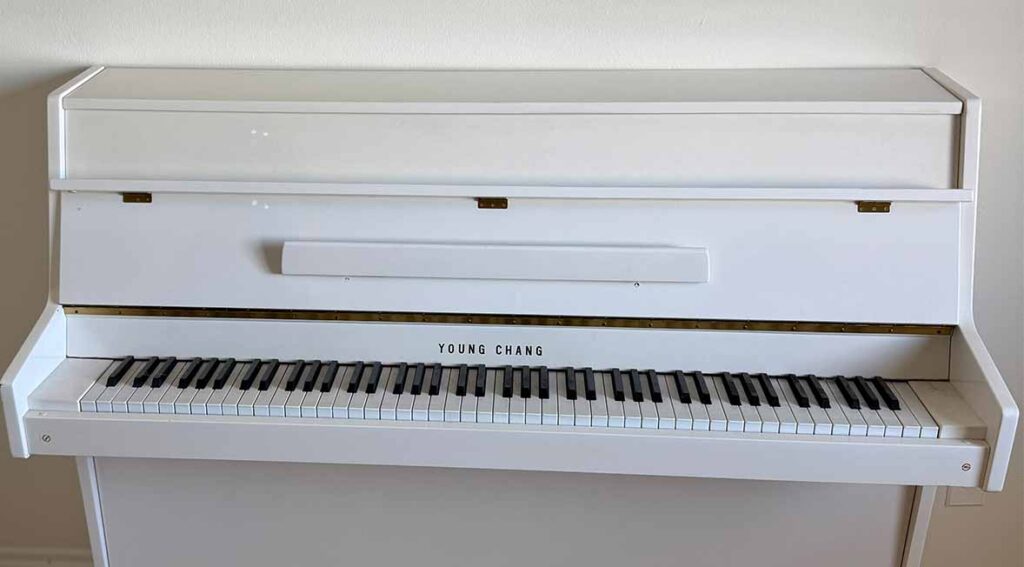
Upright piano
Tall and narrow. It stays vertical the whole time and rolls on a dolly. The main risk is tipping, because the weight sits high and toward the back.
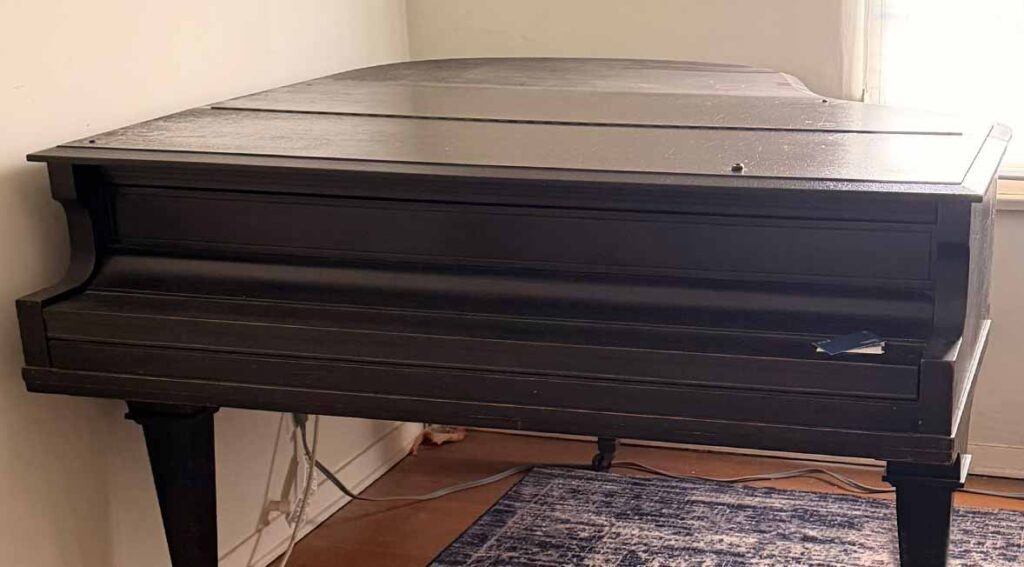
Grand piano
Wide, with legs as the weak point. It rarely fits through a doorway standing up. Crews usually remove the legs and pedal lyre, set it on its straight side and strap it to a padded piano board. Sounds rough. It’s the safest way.
STEP BY STEP
How two pianos were packed
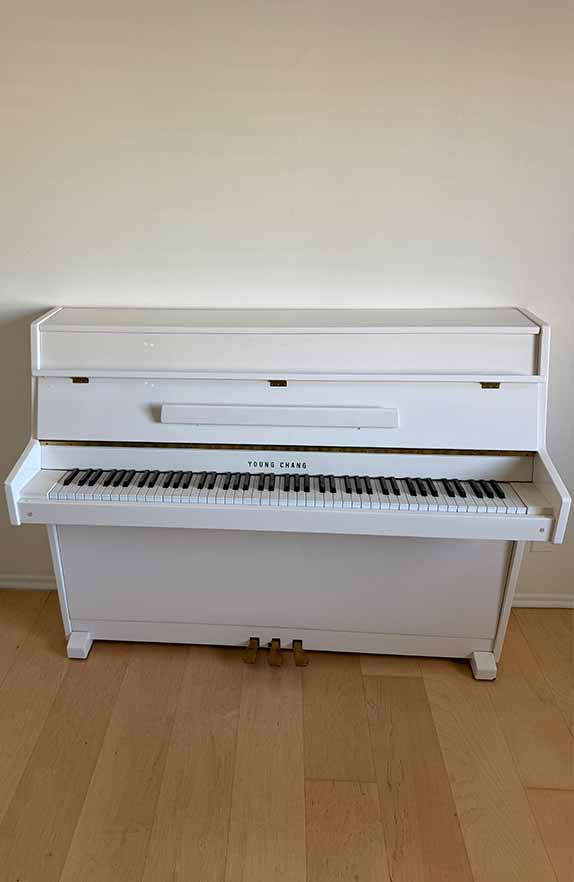
Real photos from real jobs: a black baby grand and a white Young Chang upright.
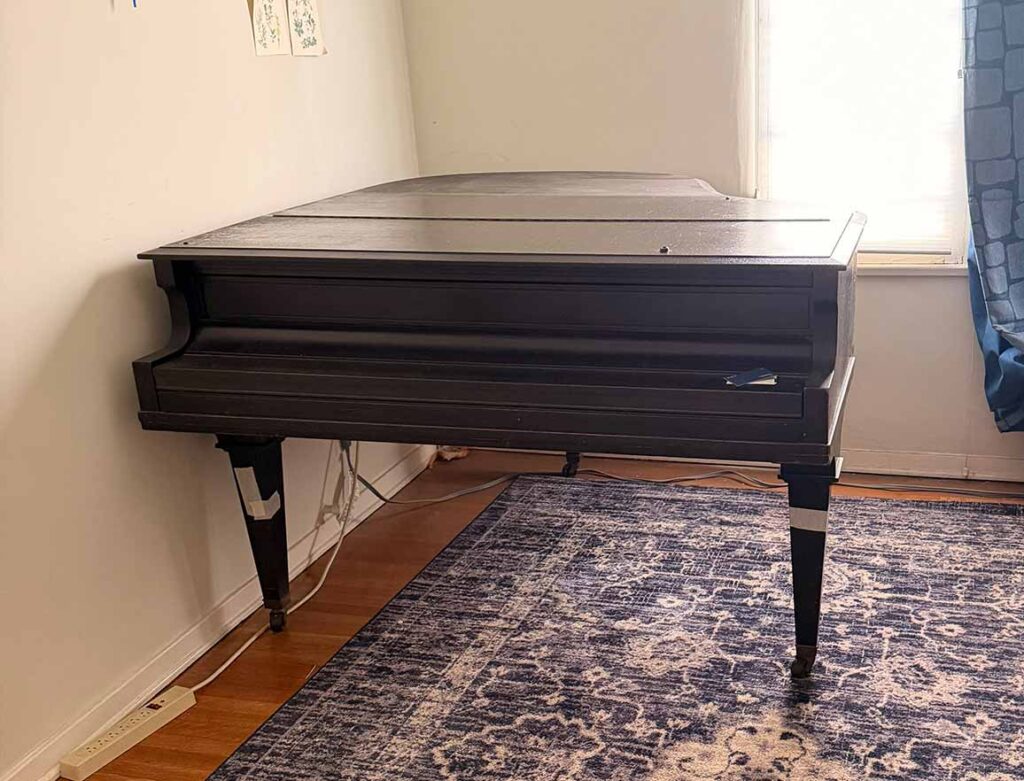
01
Inspect before touching anything
This is where most permits fail. Many cities only enforce signs posted 24–72 hours ahead, and some want you to call the police or parking enforcement so they can log the posting. Write the date and hours clearly. Don't cover existing signs.
02
Close it up, add a cardboard layer
The lid is shut and the fallboard secured so it can’t swing open. Cardboard goes around the case next. It protects the corners and keeps blankets from rubbing the finish.
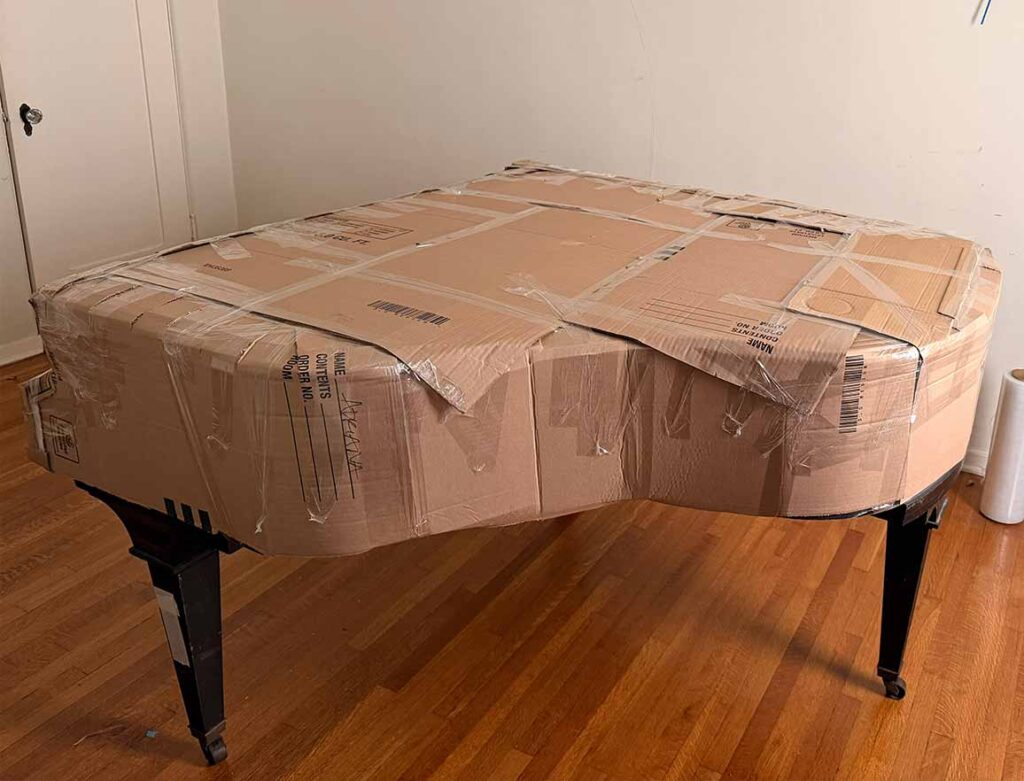
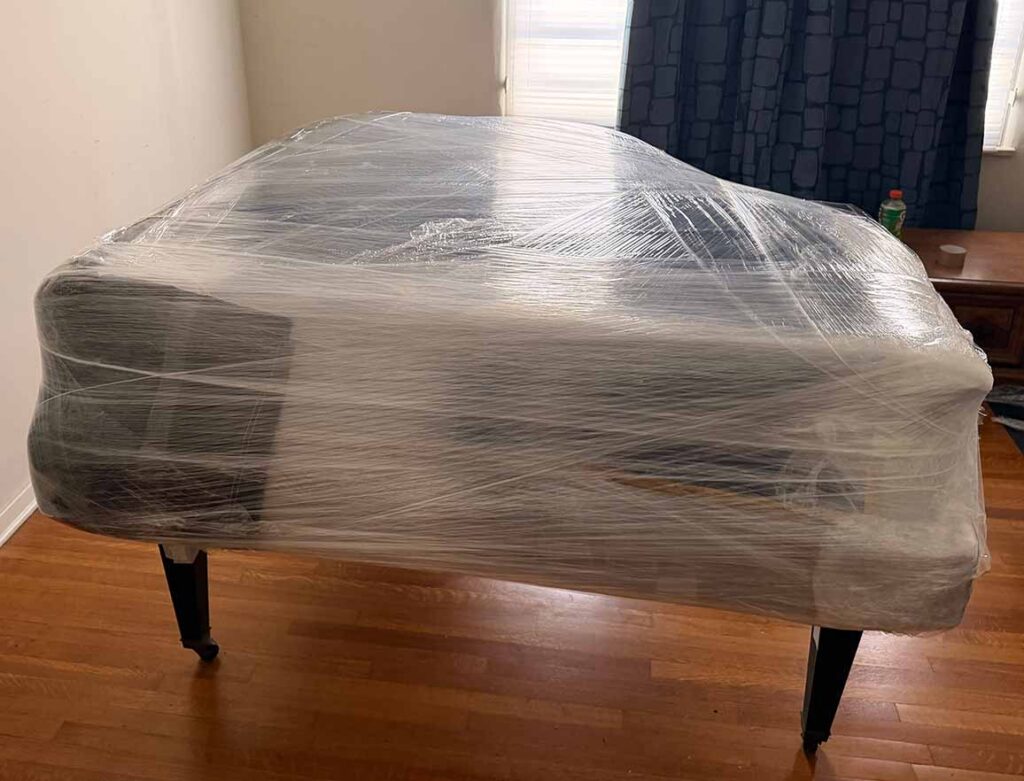
03
Wrap it tight
Moving blankets go on, and stretch wrap holds them in place. Tight enough that nothing shifts. Not so tight that it pulls at the lacquer. Nothing should stick out.
04
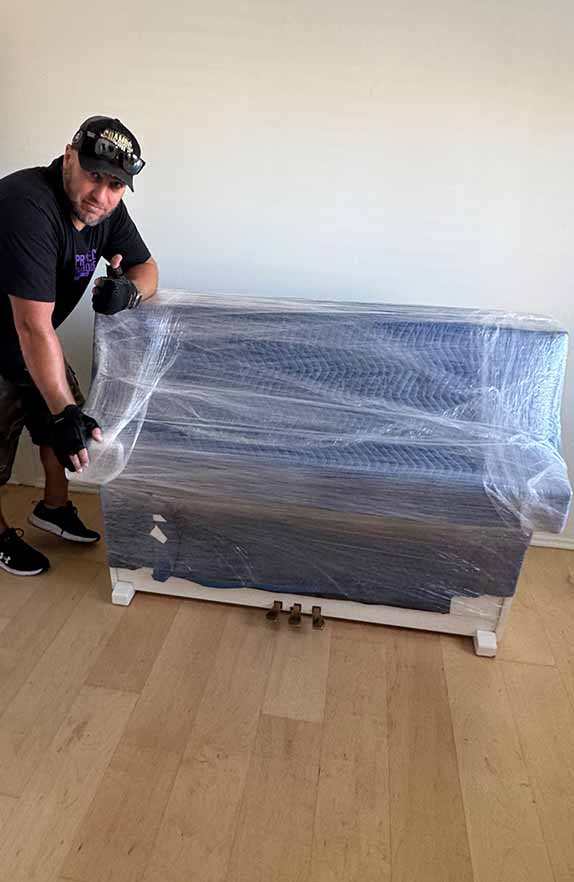
Same approach for the upright
The Young Chang got thick blankets over the whole cabinet, then a full layer of wrap. The feet and pedals stay visible so the crew can see where they’re setting it down.
05
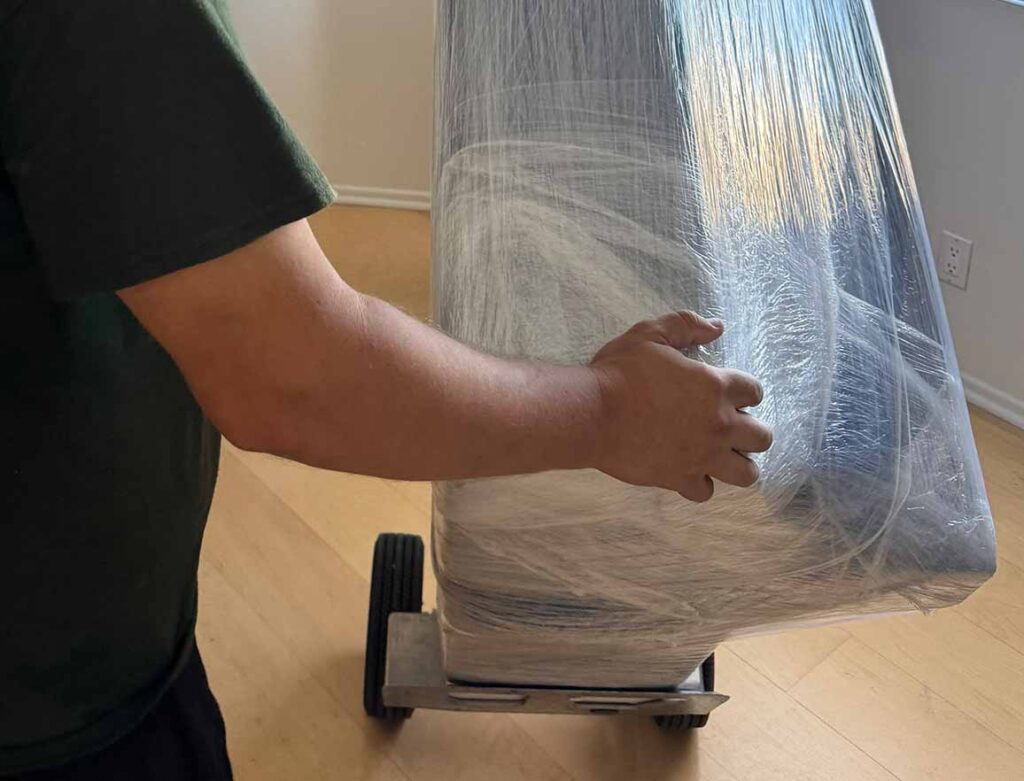
Onto the dolly
The upright tilts just enough to slide the dolly underneath. One person guides the top, the other controls the base. Nobody drags a piano on its back legs. That’s how floors get gouged and legs break.
A FEW TIPS
Before moving day
A little prep saves a lot of trouble. Packing the rest of the house too?
- Measure every doorway, hallway and stair turn at both addresses;
- Tell the movers about stairs, elevators or tight corners when you book;
- Clear a wide path and pick up loose rugs;
- Photograph the piano from all sides;
- Empty the bench and remove anything on top;
- Ask whether the company has moved a grand before.
Where DIY moves go wrong
A few friends, a rented truck, pizza afterward. These mistakes cause most of the damage:
- Lifting by the legs or the keyboard lid. Neither carries weight;
- Using a two-wheel hand truck. It isn’t stable enough;
- Skipping straps in the truck. The piano shifts on every turn;
- Underestimating stairs. Every step is a chance to lose control.
AFTER THE MOVE
Let it settle, then tune
F.A.Q.
Piano moving questions
An upright usually weighs 300 to 500 pounds. Grands are heavier. Most of the weight sits in the cast-iron plate inside, which is why the piano tips easily if it’s lifted wrong.
Usually, yes. The legs and pedal lyre come off, the piano goes on its straight side, and it’s strapped to a padded piano board. It sounds rough, but it’s the safest way through a doorway.
You can try, but most damage comes from the same mistakes: lifting by the legs or lid, using a two-wheel hand truck, skipping straps in the truck, and underestimating stairs.
Almost always. Give it a week or two in the new room so the wood adjusts, then call a tuner. Going slightly out of tune is normal and doesn’t mean anything broke.
The piano type, plus any stairs, elevators or tight corners at both addresses. Measure doorways ahead of time. It affects crew size and equipment.
Need a hand with your piano?
A piano move takes the right equipment and people who’ve done it many times.